Lost in Tuscany’s Soul: Where Every Stone Tells a Story
You know that feeling when a place just gets you? Tuscany hit me like a warm wave of history, art, and slow living. I didn’t just visit—I wandered, lingered, and fell hard for its cultural heartbeat. From centuries-old theaters to quiet hilltop chapels, every corner whispered secrets. This is more than sightseeing; it’s soul-stirring exploration at its finest. Let me take you in.
The First Step into Timelessness: Arrival in Tuscany
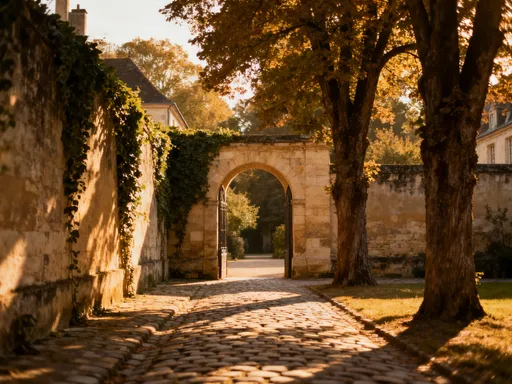
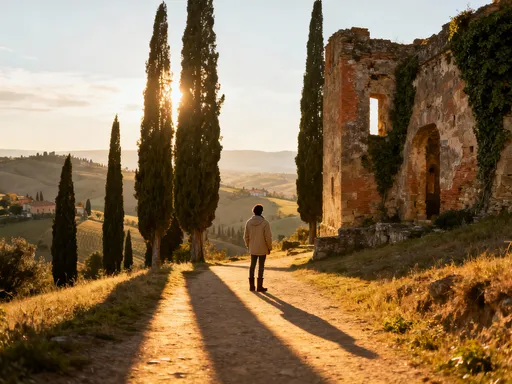
Entering Tuscany feels like stepping into a painting that breathes. The landscape unfolds in gentle waves—rows of cypress trees marching along winding roads, vineyards stitched into the hills like patchwork quilts, and golden sunlight that lingers long after noon. This is not scenery staged for cameras; it is a rhythm of life shaped by centuries. The moment you cross into this region, the pace changes. Engines idle lower. Conversations slow. Even the air carries a different weight—warm, earthy, and alive with the scent of wild rosemary and sun-baked stone. For travelers seeking more than a checklist of famous sites, Tuscany offers immersion from the very first mile.
What makes Tuscany unique is not just its beauty, but how deeply culture is woven into the land itself. This is a place where farming families still work the same soil their ancestors tilled, where village festivals honor saints whose names date back to medieval times, and where a simple meal can feel like a ritual. Choosing to travel here means choosing depth over speed. But the way you enter the region shapes the journey. Arriving through Florence offers convenience and immediate access to world-class museums and train lines. Yet for those seeking authenticity, beginning in a rural agriturismo—a restored farmhouse offering accommodations and meals—can be transformative. Waking up to rooster calls, mist over olive groves, and the smell of wood-fired bread sets a tone no hotel in the city center can replicate.
The key is intention. If your goal is to understand Tuscany, not just see it, consider starting away from the crowds. Smaller towns like Pienza, Cortona, or Montepulciano offer gateways to the heart of the region without sacrificing comfort. These hilltop villages provide not only breathtaking views but also intimate contact with local life—corner bakeries where the same woman has shaped dough for thirty years, village squares where elders gather in the evening, and markets where cheese, honey, and wine are sold by the people who made them. This is where the real story begins: not with monuments, but with moments.
Beyond the Louvre of the Hills: Exploring Historic Theaters and Opera Houses
While Tuscany’s art museums draw millions, a quieter cultural treasure thrives in its lesser-known theaters. These are not relics frozen in time, but living spaces where music, drama, and community converge. In towns like Pistoia, Arezzo, and Livorno, 18th- and 19th-century opera houses continue to host performances that honor both tradition and innovation. The Teatro Pergolesi in Jesi may be outside Tuscany, but within the region, venues like the Teatro dei Rinnovati in Siena or the Teatro Verdi in Pisa carry the same legacy—ornate balconies, velvet-draped boxes, and acoustics so precise that a whisper on stage can reach the back row.
Attending a performance in one of these spaces is more than entertainment; it is an act of cultural participation. Unlike the grandeur of La Scala or the tourist-heavy nights at Florence’s Maggio Musicale, these smaller theaters offer intimacy. You might sit beside a local who has come for the tenth time, or find yourself clapping alongside students from the nearby conservatory. The repertoire often blends classical opera with contemporary interpretations, regional folk music, or even modern dance. What remains constant is the reverence for art as a shared experience—not a spectacle to consume, but a conversation to join.
For travelers, the challenge is not finding these venues, but timing the visit around their schedules. Many operate seasonally, with peak activity in spring and autumn. Some, like the summer festival at the Roman amphitheater in Fiesole, transform ancient ruins into open-air stages under the stars. To plan ahead, check regional tourism websites or inquire at local tourist offices for upcoming performances. Tickets are often affordable—sometimes under 30 euros—and booking in advance is wise, especially during festival seasons. Dress is generally smart casual; while formalwear is not required, many locals still wear jackets or dresses, reflecting the occasion’s significance.
What makes these evenings unforgettable is the atmosphere. The dimming of lights, the rustle of programs, the hush before the first note—these moments connect you to centuries of tradition. You’re not just watching history; you’re inside it. And when the final aria fades and the audience rises in applause, there’s a shared understanding: this is what culture feels like when it’s alive.
Chapels That Breathe Art: The Spiritual Side of Tuscan Culture
Tuscany’s soul is not only in its landscapes and performances but also in its sacred spaces. While cathedrals like Florence’s Duomo command attention with their scale, it is the smaller chapels and churches that often hold the most profound emotional power. Places like the Church of Sant’Agostino in San Gimignano, the Chiesa di Santa Maria della Scala in Siena, or the little-known Oratory of San Bernardino in Perugia (just beyond the border but stylistically linked) are not merely houses of worship—they are galleries where devotion and artistry merge. Inside, frescoes stretch across vaulted ceilings, saints gaze down from gilded altarpieces, and sunlight filters through stained glass in hues of amber and sapphire.
What strikes visitors is not just the beauty, but the silence. Unlike the bustling main cathedrals, these smaller sites are often uncrowded, allowing for contemplation. You can stand inches from a 14th-century fresco by Bartolo di Fredi or gaze up at a wooden crucifix carved with such sorrow it feels almost alive. These spaces were built not for tourists, but for prayer, community, and reflection. Yet today, they welcome all who come with respect. The art within tells stories—of faith, of suffering, of hope—that transcend religious belief. Even for those who do not practice, the experience can be deeply moving.
To visit these chapels well requires mindfulness. Many are still active places of worship, so modest dress is essential—shoulders covered, skirts or pants preferred. Silence is expected, and photography may be restricted, especially during services. The best times to visit are early morning or late afternoon, when light enhances the colors of the artwork and crowds are minimal. Some sites offer guided tours that explain the symbolism behind the paintings—why certain saints are depicted with specific objects, or how the use of gold leaf signified divine presence. These details deepen understanding and enrich the experience.
Perhaps most importantly, these chapels remind us that beauty was once inseparable from purpose. Art was not created for museums but for meaning. In an age of fast images and digital overload, standing in a quiet Tuscan chapel feels like a return to something essential. It is not about belief, but about presence. And in that stillness, many travelers find a kind of peace they didn’t know they were seeking.
Craftsmanship in the Making: Workshops and Ateliers Off the Beaten Path
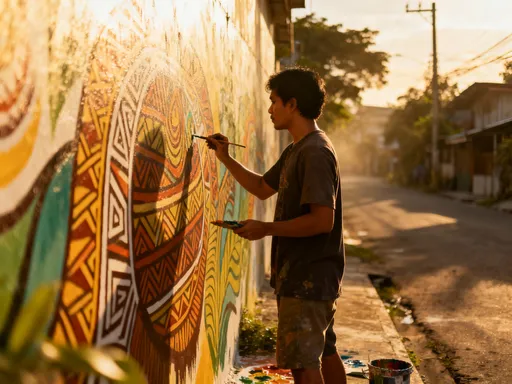
One of Tuscany’s greatest gifts is its living tradition of craftsmanship. Beyond the souvenir shops selling mass-produced leather bags and painted ceramics, there are workshops where skills are passed from hand to hand, generation to generation. In Montelupo Fiorentino, a town renowned since the Renaissance for its pottery, artisans still shape clay on spinning wheels, dip brushes into mineral glazes, and fire their pieces in wood-burning kilns. In Florence, leatherworkers in the Santa Croce district cut, stitch, and polish hides with tools their grandfathers once used. In Volterra, masters of alabaster carving transform soft stone into delicate lamps, vases, and sculptures that glow when held to the light.
Visiting these ateliers is not about shopping—it’s about connection. The moment you step inside, the senses awaken. The earthy smell of wet clay, the rhythmic tap of a chisel on stone, the rich aroma of tanned leather. But most striking is the pride in the artisan’s eyes. These are not factory workers; they are artists who speak of their craft with reverence. Many welcome visitors not as customers, but as guests. Some offer short workshops—two hours to throw a bowl, paint a plate, or stamp a leather journal cover. These experiences transform tourism from passive observation into active participation.
Finding authentic studios requires a bit of effort. Look for signs that say “laboratorio artigianale” or ask local tourist offices for recommendations. Avoid shops that advertise “factory outlets” or “wholesale prices”—these often sell imported goods. Instead, seek places where you can see the work being done in the back room. In Florence, the Scuola del Cuoio (Leather School) inside the Santa Croce complex offers demonstrations and classes. In Siena, the Contrade museums—dedicated to the districts of the Palio—often include artisan corners where traditional banners and costumes are still made by hand.
Supporting these craftspeople is a form of cultural preservation. Every purchase—whether a small ceramic spoon or a hand-tooled belt—helps sustain a way of life. But even if you don’t buy anything, the act of witnessing, of asking questions, of saying “grazie” with sincerity, matters. In a world of fast fashion and disposable goods, Tuscany’s artisans remind us that time, patience, and care are not lost virtues. They are the foundation of beauty.
Libraries and Archives: Where Silence Speaks Volumes
In a region celebrated for its visual art, the written word holds equal power. Tuscany is home to some of Europe’s most important libraries and archives—quiet sanctuaries where knowledge has been preserved for centuries. The Laurentian Library in Florence, designed by Michelangelo, houses over 11,000 manuscripts, including original works by Virgil, Cicero, and Dante. The Magliabechiana section of the National Central Library collects rare books and historical documents that trace the evolution of science, philosophy, and literature. Even smaller towns often have communal archives tucked inside medieval town halls, preserving records of births, marriages, and land deeds that stretch back 500 years.
These spaces are not just for scholars. Many offer guided tours that allow visitors to walk through the reading rooms, see ancient texts behind glass, or even view digital reproductions of fragile manuscripts. The experience is humbling. To stand in a room where Galileo’s letters are stored, or to see a 15th-century map of the world drawn by a monk who believed the Earth was flat, is to touch history in a deeply personal way. The silence in these libraries is not empty—it is thick with thought, with the weight of ideas that changed the world.
For the modern traveler, used to instant information and digital overload, spending an hour in a Tuscan library can feel radical. There are no screens, no notifications, no distractions. Just wood-paneled walls, soft light, and the occasional rustle of a page. Some libraries, like the Riccardiana or the Marucelliana, allow visitors to sit in the reading rooms and absorb the atmosphere. While accessing original manuscripts requires academic credentials, digital exhibits and audio guides make the collections accessible to all.
The lesson here is simple but profound: culture is not only in what we see, but in what we read, in what we remember. The Renaissance began not just with paintings, but with books—recovered texts from ancient Greece and Rome that sparked a revolution in thinking. Today, these libraries remind us that knowledge is a legacy, not a commodity. To honor them is to slow down, to listen, and to recognize that wisdom is built over time, not downloaded in seconds.
Festivals as Living Heritage: Timing Your Visit for Cultural Moments
Tuscany’s culture is not confined to buildings or books—it pulses in its festivals. These are not staged for tourists, but rooted in centuries of tradition, faith, and community identity. The Palio in Siena, held twice each summer, is perhaps the most famous: a bareback horse race around the shell-shaped Piazza del Campo, where rival neighborhoods compete with fierce pride. But there are dozens of others—the Calcio Storico in Florence, a violent Renaissance-era football match; the Grape Festival in Impruneta; the Chestnut Festival in San Zeno. Each turns the town into a stage, the streets into theaters of memory.
What makes these events powerful is their authenticity. Participants are not actors, but locals—grandfathers, teenagers, shopkeepers—who train for months, wear handmade costumes, and carry banners embroidered with symbols that date back to the Middle Ages. The rituals are precise: processions with historical flags, blessings by priests, anthems sung in dialect. There is joy, tension, and sometimes tears. For visitors, the experience is immersive. You don’t just watch—you feel the drumbeats in your chest, smell the smoke from torches, hear the roar of the crowd as the race begins.
Attending these festivals responsibly means understanding their significance. They are not shows, but expressions of identity. Dress modestly, follow local guidance, and avoid blocking views or disrupting ceremonies. Photography should be discreet. If possible, learn a few phrases in Italian—“buona fortuna,” “complimenti”—to show respect. Booking accommodations months in advance is essential, as towns fill quickly. But the effort is worth it. To witness a festival like the Palio is to understand how tradition binds people together, how history lives in the present.
For families, these events offer rare educational moments. Children see history not in textbooks, but in motion—drummers in velvet coats, horses adorned with ribbons, women in embroidered dresses. And for adult travelers, especially those in their 30s to 50s, there is a deep emotional resonance. These festivals speak to belonging, to continuity, to the idea that some things—pride, loyalty, celebration—are timeless.
Traveling with Purpose: How to Deepen Your Cultural Engagement
The true magic of Tuscany lies not in checking off landmarks, but in the moments of connection that take root quietly. It’s in the glance exchanged with a potter as he shapes a vase, the hush before an aria begins, the way sunlight hits a fresco at 5 p.m. on a Tuesday. These are not highlights to photograph, but experiences to carry within. To travel here with purpose is to shift from seeing to feeling, from collecting images to collecting understanding.
This kind of journey requires a different mindset. It asks for patience—to wait for the right light, to listen even when you don’t understand the words, to sit in a chapel without rushing to the next site. It asks for curiosity—to ask the baker how she makes her bread, to learn the name of the saint in the corner chapel, to read about the history behind a festival. And it asks for respect—to leave spaces as you found them, to support local artisans, to honor traditions not as performances, but as living truths.
Tuscany teaches us that culture is not a destination, but a way of moving through the world. It is in the care taken to make a meal, the pride in a handmade shoe, the courage to race a horse through narrow streets for honor. These are not relics, but rhythms. And when we align ourselves with them, even briefly, we don’t just visit a place—we become part of its story.
So go to Tuscany. Wander its hills, sip its wine, trace its art with your eyes. But do more than that. Let it change you. Let the stones speak. Let the silence teach. And when you leave, carry not just souvenirs, but a deeper sense of what it means to live with intention, beauty, and heart. Because in the end, the best travels don’t just show us the world—they show us ourselves.