You Won’t Believe How Islamabad’s Festivals Come Alive
I never expected Islamabad, often seen as a quiet capital, to explode with color and rhythm the way it does during festival season. Beyond its clean streets and diplomatic calm lies a vibrant soul—festivals that blend tradition, music, and community in ways that feel both authentic and electric. From spring celebrations in the Margalla foothills to cultural fairs at Lok Virsa, I discovered a side of Pakistan few travelers talk about. This is festival culture at its most heartfelt—and it’s waiting to be experienced.
The Pulse of Tradition: Islamabad’s Festival Identity
Islamabad, Pakistan’s planned capital, is often described in terms of order—tree-lined avenues, government ministries, and diplomatic enclaves. Yet beneath this structured surface pulses a deeply rooted festival culture that reveals the city’s emotional core. Unlike the overwhelming sensory rush of older urban centers like Lahore or Karachi, Islamabad’s celebrations are thoughtfully curated, allowing tradition to shine without being drowned in chaos. National holidays such as Pakistan Day on March 23 and Independence Day on August 14 are not merely formal observances here; they are living events that engage citizens of all ages in shared expressions of pride and heritage.
On Pakistan Day, the city comes alive with military parades along Constitution Avenue, where precision drills, vintage aircraft flyovers, and patriotic music honor the nation’s founding ideals. Schools and colleges organize student performances featuring folk dances from different provinces, traditional songs, and dramatic reenactments of historical moments. Public spaces like Shakarparian Park and Faisal Mosque become stages for open-air exhibitions, with art installations and photo displays narrating Pakistan’s journey since 1947. These events are supported by the Capital Development Authority (CDA) and the Ministry of Culture, ensuring accessibility while preserving cultural authenticity.
What sets Islamabad apart is its ability to balance modern urban planning with organic cultural expression. The city’s low population density and wide green spaces allow festivals to unfold without overcrowding, making them family-friendly and inclusive. Street decorations in green and white, the national colors, appear weeks in advance, and local businesses often join in by hosting mini-events or offering themed food items. This civic participation reflects a broader sense of national belonging, where festivals are not just spectacles but moments of collective identity. The government’s role is facilitative rather than intrusive—providing infrastructure and security while allowing communities to shape the celebrations in their own voices.
Even religious holidays are marked with a unique blend of reverence and public joy. The month of Ramadan transforms the city with pre-dawn markets, charity drives, and nightly iftar gatherings in parks. While the spiritual aspect remains central, the festive atmosphere grows stronger as Eid approaches. Mosques are illuminated, and neighborhoods organize processions and communal meals. This balance between solemnity and celebration is a hallmark of Islamabad’s festival character—one that honors tradition while embracing the rhythms of contemporary life.
Spring in the Hills: The Islamabad Literature Festival and Spring Festivities
If there is a season that best captures Islamabad’s spirit, it is spring. As temperatures rise and the Margalla Hills shed their winter haze, the city undergoes a transformation. Jacaranda trees burst into purple bloom along Constitution Avenue, and the air fills with the scent of wildflowers. This natural reawakening coincides with a cultural renaissance, most vividly expressed in the annual Islamabad Literature Festival (ILF), held at the Pakistan National Council of the Arts (PNCA) in G-5. What began as a modest gathering of writers has grown into a nationally recognized event, drawing authors, poets, journalists, and readers from across the country.
The ILF unfolds over three days of panel discussions, book launches, poetry recitations, and storytelling sessions for children. Tents are set up in the open courtyard, where attendees sit on colorful cushions beneath shaded canopies. The atmosphere is intellectual yet relaxed, with the sound of Urdu and English debates blending with the rustle of pages and clinking tea cups. One might find a novelist from Lahore discussing diaspora identity, a historian from Peshawar unpacking regional folklore, or a young poet from Quetta performing original work in Pashto. Book stalls run by publishers like Oxford University Press and Sang-e-Meel offer rare titles and discounted editions, making literature accessible to all.
Beyond the formal program, the festival embodies the spirit of spring itself—renewal, curiosity, and connection. Families come for weekend outings, students attend to meet literary role models, and elderly couples sip chai while listening to classic ghazals. The PNCA’s location, nestled between hills and city, enhances this sense of harmony between nature and culture. In the evenings, open-mic sessions draw crowds under strings of fairy lights, where first-time writers bravely share their work and audiences respond with warm applause. It is not uncommon to see parents encouraging their teenage children to perform, reinforcing intergenerational bonds through shared creativity.
While the Literature Festival is a highlight, it is part of a broader springtime energy that sweeps through Islamabad. Residents take full advantage of the mild weather, organizing picnics in Ayub National Park, hiking trails in the Margallas, and informal flower markets near F-9 Park. On weekends, the parks become lively with kite-flying, traditional music, and food carts serving pakoras and falooda. The city’s green spaces, carefully maintained by the CDA, serve as natural venues for spontaneous celebration. Even simple walks along Jinnah Avenue become festive, with street vendors selling hand-painted masks, herbal teas, and seasonal fruits like loquats and apricots.
Living Heritage: Lok Virsa’s Role in Cultural Preservation
No discussion of Islamabad’s festival culture is complete without mentioning Lok Virsa, the Pakistan National Heritage Museum. Located on Shakarparian Hill with panoramic views of the city and the Margalla range, Lok Virsa is more than a museum—it is a living archive of national traditions. During major holidays and cultural weeks, the grounds transform into a bustling hub of activity, where music, craft, and storytelling come together in a celebration of unity in diversity. The institution plays a crucial role in preserving and promoting the folk arts of Pakistan’s four provinces, as well as regions like Gilgit-Baltistan and Azad Kashmir.
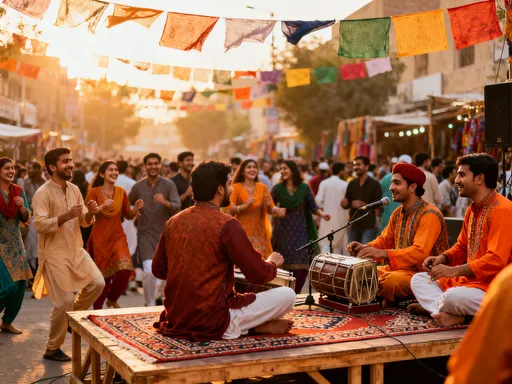
During festivals, Lok Virsa hosts regular folk music performances featuring instruments like the sitar, dhol, and algoze. Artists from remote villages are invited to perform traditional songs—Sufi qawwalis from Punjab, melancholic melodies from Balochistan, and joyful wedding tunes from Sindh. These performances are not staged for tourists alone; they are attended by locals who come to reconnect with their roots. Children dance to the rhythms, elders hum along, and young people record videos to share online, creating a bridge between generations. The museum also organizes craft bazaars where artisans sell handmade textiles, pottery, jewelry, and woodwork, often demonstrating their techniques in real time.
What makes Lok Virsa unique is its emphasis on participation. During Eid and spring festivals, the museum runs special workshops for children—making puppets, learning regional dances, or creating miniature models of traditional houses. These activities are designed to be both educational and joyful, instilling cultural pride from an early age. Families spend entire afternoons at the museum, exploring reconstructed village homes, trying on traditional costumes, and tasting regional foods like chapli kebab and sheer khurma. The experience is immersive, offering a microcosm of Pakistan’s rich cultural mosaic within a single location.
Lok Virsa’s role extends beyond entertainment. It serves as a platform for endangered traditions to survive and adapt. Weavers from Chitral, for example, use the festival season to showcase their intricate shawls, gaining both recognition and income. Similarly, folk singers from South Punjab find new audiences for their storytelling ballads. By providing a dignified space for these artists, Lok Virsa ensures that festival culture remains authentic rather than commercialized. For visitors, this means an opportunity to witness heritage not as a relic of the past, but as a living, evolving practice.
Eid with a Local Family: A Personal Glimpse into Private Celebrations
While public festivals offer spectacle and energy, some of the most meaningful experiences occur behind closed doors. During my visit in spring, I was fortunate to receive an invitation to celebrate Eid al-Fitr with a local family in the E-11 neighborhood. The invitation itself was a gesture of warmth—extended not out of obligation, but genuine hospitality. As I arrived before sunrise, the city was quiet, but the streets were already alive with anticipation. Homes were decorated with fairy lights, and children in new clothes ran between houses, exchanging sweets.
The day began with morning prayers at a nearby mosque. Men, women, and children dressed in their finest attire walked together, many carrying prayer mats. The atmosphere was one of solemn gratitude, with imams delivering sermons on unity, charity, and renewal. After the prayer, families embraced, exchanged greetings of “Eid Mubarak,” and made their way home for the main feast. The host family had prepared an elaborate spread—fragrant beef biryani, chicken karahi, daal, and an array of desserts including sheer khurma, a rich vermicelli pudding made with dates, milk, and nuts.
What struck me most was the emphasis on togetherness. The entire extended family was present—grandparents, uncles, aunts, and cousins—sitting together on the floor, sharing food and stories. Children played in the courtyard, their laughter blending with the sound of music from a traditional tapestry of Sufi and folk songs playing in the background. The ritual of eidi—the giving of gift money to younger family members—was carried out with great joy, often accompanied by playful teasing and blessings. It was clear that Eid was not just about celebration, but about reaffirming bonds and expressing love.
The family also made time for charity, a core principle of Eid. Before the feast, they distributed food packages to neighbors in need and donated to a local orphanage. This act of giving was done quietly, without fanfare, reflecting the Islamic value of sincerity in worship. As the day wound down, guests continued to arrive, each welcomed with tea and sweets. The sense of openness and generosity was overwhelming. For a visitor, such an experience offers a rare window into the heart of Pakistani life—one defined not by grandeur, but by warmth, faith, and community.
Art, Music, and Youth: The Rise of Urban Cultural Events
While traditional festivals remain central, a new wave of cultural expression is emerging in Islamabad, driven by its young, educated population. Universities, art collectives, and independent organizers are creating spaces where creativity can flourish outside formal institutions. Events like the Youth Festival at Fatima Jinnah Park and the Islamabad Art Festival at the PNCA reflect a growing appetite for self-expression, blending global influences with local identity. These gatherings are not replacements for tradition, but expansions of what festival culture can be.
Indie music has found a vibrant home in Islamabad’s café culture. Small venues in F-7 and F-8 host acoustic nights, where young musicians perform original songs in Urdu, English, and regional languages. Genres range from folk-rock fusion to spoken word poetry with jazz accompaniment. These performances attract diverse audiences—students, professionals, and even older generations curious about the new sounds. Social media plays a key role in promoting these events, with Facebook groups and Instagram pages announcing gigs weeks in advance. What was once an underground scene has gained legitimacy, with some artists signing with local labels and performing at national festivals.
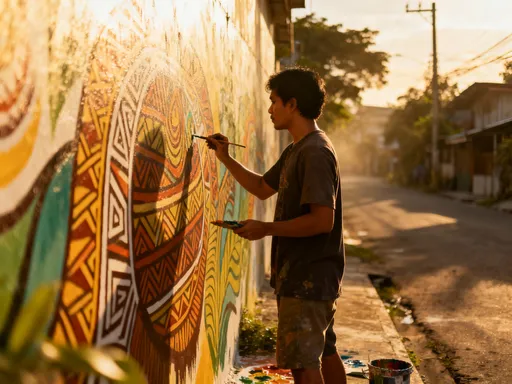
Street art and pop-up markets are also gaining traction. During spring and autumn, vacant lots in Blue Area and G-11 are transformed into temporary galleries, where painters, photographers, and sculptors display their work. Food trucks offer modern takes on traditional dishes—think chapli burger tacos or mango lassi smoothies—creating a fusion experience that appeals to younger tastes. These events are often organized by youth-led NGOs or university clubs, emphasizing sustainability, creativity, and inclusivity. They are not commercial ventures, but community projects aimed at building cultural confidence.
This evolution does not erase tradition; it reinterprets it. A young designer might use Balochi embroidery techniques in a modern dress. A rapper might sample a Punjabi folk tune in a track about urban life. These creative fusions reflect a generation that respects its roots while embracing change. For families, these events offer new ways to engage with culture—parents bringing children to art fairs, grandparents attending music nights. In this way, festival culture in Islamabad is becoming more dynamic, inclusive, and reflective of the nation’s evolving identity.
Festival Logistics: When, Where, and How to Participate
For travelers seeking to experience Islamabad’s festival season, timing and preparation are key. The best periods to visit are spring (March to May) and post-monsoon autumn (September to November), when the weather is mild and the city is most active culturally. March is particularly vibrant, with Pakistan Day, the Literature Festival, and spring celebrations all occurring within weeks of each other. October and November bring cooler temperatures and events tied to cultural heritage weeks and university festivals.
Finding event information is easier than many expect. Local newspapers like Dawn and The News publish cultural calendars, and the PNCA and Lok Virsa websites list upcoming programs. University notice boards, especially at Quaid-e-Azam University and Air University, often advertise student-led events. Social media groups such as “Islamabad Events” on Facebook are reliable sources for last-minute updates and community recommendations. Many events are free and open to the public, though some require online registration due to space limits.
When attending festivals, visitors should dress modestly out of respect for local customs. Women may choose to wear shawls, and men should avoid shorts in formal settings. It is customary to remove shoes before entering certain cultural spaces or private homes. Photography is generally welcome, but it is polite to ask permission before taking pictures of performers or families. Engaging with locals—asking about a dish, complimenting a craft—goes a long way in building connections.
Transportation in Islamabad is relatively straightforward. Ride-hailing apps like Careem and InDrive operate widely, and the CDA has improved road signage and parking near major venues. For those staying in hotels, many offer shuttle services to cultural sites during festival season. Safety is generally high, especially in planned sectors, but travelers should remain aware of their surroundings and avoid isolated areas at night. With basic preparation, even first-time visitors can navigate the festival scene with confidence and respect.
Beyond the Capital: How Islamabad’s Festivals Reflect National Spirit
Islamabad’s festivals are more than local events—they are reflections of a broader national spirit. In a country often portrayed through the lens of geopolitical tension, these celebrations offer a different narrative: one of resilience, creativity, and unity. Each festival, whether grand or intimate, carries the weight of history and the hope of continuity. They are not escapes from reality, but affirmations of identity in a rapidly changing world.
From the disciplined parades of Pakistan Day to the joyful chaos of Eid gatherings, from the intellectual energy of the Literature Festival to the handmade crafts at Lok Virsa, Islamabad’s festival culture embodies balance. It shows how tradition and modernity, public and private, solemnity and joy can coexist. For families, these events are moments of togetherness; for youth, they are platforms for innovation; for visitors, they are invitations to see Pakistan with fresh eyes.
More than anything, these festivals remind us that culture is not static. It lives in the songs sung by grandmothers, the books read by students, the food shared across generations. They are acts of preservation and transformation, quietly shaping the nation’s soul. To experience them is to witness Pakistan not as a headline, but as a living, breathing community.
To the women who plan family Eids with love, the artisans who keep ancient crafts alive, the students who organize music nights with passion—your celebrations matter. And to the traveler wondering where to begin: come during festival season. Walk through the blooming avenues, listen to the music, accept an invitation to share a meal. Let the rhythm of Islamabad’s festivals remind you that joy, in all its forms, is universal. This is not just a city celebrating—it is a nation remembering who it is, one festival at a time.