You Won’t Believe What Dijon’s Hidden Corners Reveal
Dijon isn’t just about mustard—trust me, I was surprised too. Wandering its cobbled lanes, I stumbled upon silent courtyards, glowing stained glass, and rooftops that shimmer at golden hour. This city unfolds like a secret journal, page by page. If you’re chasing real moments, not just checkmarks, Dijon’s viewing experiences will redefine your idea of French charm. Let’s dive into the sights that made me pause, stare, and whisper, “This is magic.”
Beyond the Postcard: Discovering Dijon’s True Visual Soul
Dijon’s charm extends far beyond the glossy postcards that feature its mustard jars and clock towers. While these symbols are iconic, the city’s real visual soul lies in the quieter details—the way morning light slants across weathered stone, how a centuries-old archway frames a fleeting glimpse of a hidden garden, or the subtle play of shadow and reflection along its narrow alleys. The historic center, a UNESCO World Heritage site by virtue of its remarkably preserved Burgundian architecture, invites travelers to slow down and observe with intention. Here, time seems to move differently, measured not by schedules but by the rhythm of footsteps on uneven cobblestones and the occasional chime of a distant church bell.
The architecture itself tells a layered story. Gothic spires rise beside Renaissance townhouses adorned with ornate carvings, while Romanesque remnants whisper of even older foundations. What makes Dijon visually distinct is not just the grandeur of individual buildings, but the harmony of its urban fabric. The ochre, amber, and gray tones of the limestone buildings create a warm, cohesive palette that shifts with the daylight. Unlike cities that dazzle with constant motion, Dijon rewards stillness. Standing quietly in a tucked-away square, one begins to notice how light filters through linden trees, casting dappled patterns on the pavement, or how the texture of a moss-covered wall seems to pulse with quiet life. These are not sights to be rushed through, but absorbed.
Visual appreciation in Dijon is deeply tied to pace. When travelers allow themselves to wander without a fixed destination, the city reveals its nuances. A sudden turn down an alley might unveil a weathered door with a wrought-iron handle shaped like a grapevine, or a balcony overflowing with geraniums against a slate roof. These moments are fleeting, unscripted, and profoundly moving. The city’s aesthetic appeal is not about perfection, but about the poetry of imperfection—the chipped corner of a statue, the uneven wear on a stone step, the way ivy climbs a wall with quiet persistence. To see Dijon fully is to embrace the beauty of the overlooked, the understated, and the quietly enduring.
The Must-See Perspective: Palace of the Dukes and Its Elevated Views
No visit to Dijon is complete without experiencing the Palais des Ducs, the former residence of the powerful Dukes of Burgundy. This imposing complex, rooted in the 14th century, stands as both a historical anchor and a visual gateway to the city. From the grand courtyard, flanked by Gothic and Renaissance wings, visitors gain their first real sense of Dijon’s layered past. The façade, with its intricate sculptures and rose window, commands attention, but the true revelation comes from ascending the Tour de la Philippe le Bon—the tower named after the 15th-century duke who expanded the palace. Climbing its spiral staircase is like stepping into a vertical timeline, each level offering a broader perspective on the city’s layout and character.
At the top, the panoramic view is nothing short of transformative. The sea of terracotta rooftops stretches in every direction, punctuated by church spires and the occasional modern rooftop garden. On a clear day, the rolling hills of Burgundy appear on the horizon, reminding visitors that Dijon is not just an urban jewel but a gateway to one of France’s most cherished wine regions. The elevated vantage point allows the eye to trace the city’s medieval street pattern—its radiating lanes and hidden courtyards now visible as a living map. It becomes clear how Dijon’s charm is not accidental, but the result of centuries of thoughtful, organic growth.
For the best viewing experience, timing is essential. Early morning, shortly after the tower opens, offers the clearest light and fewest crowds. The soft, angled sunlight illuminates the rooftops without harsh glare, making it ideal for photography. Late afternoon also brings a golden glow, especially when the sun strikes the stone façades at a low angle. Tickets for the tower can be purchased at the Musée des Beaux-Arts, which occupies part of the palace and is well worth a visit. To avoid lines, consider arriving right at opening time or just before closing. Comfortable shoes are recommended, as the climb is steep and the steps uneven. Bring a small camera or smartphone with a wide-angle lens to capture the full sweep of the cityscape. Most importantly, take a moment at the top to simply breathe and absorb—not just the view, but the quiet pride of a city that has stood through centuries of change.
Hidden Courtyards and Secret Passages: Where Light Plays Differently
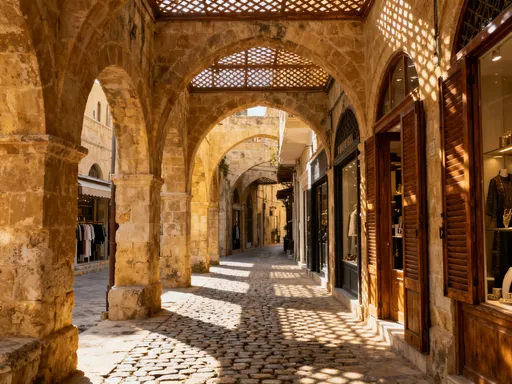
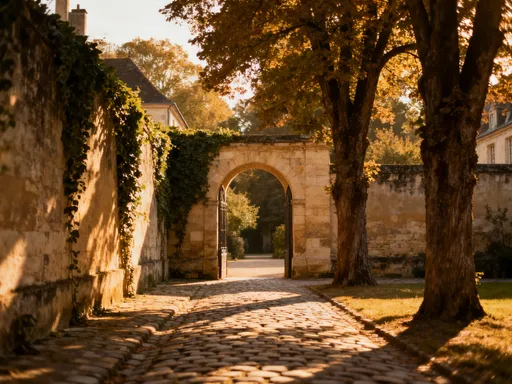
One of Dijon’s most enchanting qualities is its network of hidden courtyards, known locally as *hôtels particuliers*—private mansions built by noble families and wealthy merchants during the 17th and 18th centuries. These architectural gems are often concealed behind unassuming archways, accessible only through narrow passageways that seem to invite only the curious. Stepping through one of these arched entrances is like crossing a threshold into another world. The noise of the street fades, replaced by an almost sacred silence. Sunlight, filtered through linden or chestnut trees, dapples the stone floor, and ivy climbs the walls with deliberate grace. These courtyards are not merely architectural relics; they are living spaces where light, texture, and stillness converge to create moments of quiet awe.
The sensory contrast is immediate. Outside, the city hums with the rhythm of daily life—bicycles clinking, café chatter, the occasional bus rumbling by. Inside these secluded spaces, time slows. The air feels cooler, the colors richer. The stone, worn smooth by centuries of footsteps, glows in the soft light. Some courtyards feature fountains, their gentle trickle adding to the sense of tranquility. Others are framed by symmetrical staircases or ornate balconies, their symmetry broken only by the randomness of nature—creeping vines, fallen leaves, a bird perched on a ledge. These spaces are not staged for tourists; they are private, protected, and deeply authentic. Yet many are open to the public during daylight hours, inviting quiet exploration.
For those seeking the most atmospheric discoveries, certain districts stand out. Rue de la Chouette, named after an owl carving embedded in the church of Notre-Dame, is a favorite among locals and discerning travelers. The owl, said to bring good luck when touched with the left hand, is just one of many small wonders along this short street. Nearby, the Place du Bareuzai offers a cluster of beautifully preserved townhouses surrounding a peaceful square. From here, several narrow lanes lead to lesser-known courtyards, each with its own character. Another rewarding route begins at the Rue Sainte-Anne, where a series of interconnected passages opens onto hidden gardens and quiet plazas. Wandering these areas requires no map—only a willingness to follow intuition and pause often. The reward is not a checklist of sights, but a collection of intimate visual memories: a shaft of light hitting a weathered door, a cat sunning itself on a windowsill, the way shadows stretch across a courtyard at midday.
Golden Hour Magic: When Dijon Turns to Amber
There is a moment in Dijon, just before sunset, when the entire city seems to catch fire. The golden hour—those fleeting minutes when the sun hangs low on the horizon—transforms Dijon’s stone façades into glowing masterpieces. What was once a city of subtle earth tones becomes a tapestry of amber, rose, and molten gold. This is not a fleeting trick of the light, but a daily alchemy that elevates the ordinary into the extraordinary. Streets that felt merely charming in daylight take on a cinematic quality, their textures heightened, their shadows elongated, their reflections shimmering in puddles or shop windows. For those who time their visit right, Dijon at golden hour offers some of the most breathtaking viewing experiences in France.
One of the best places to witness this transformation is Place Stanislas, a graceful square named after the 18th-century Polish king who once ruled Lorraine. Though technically in nearby Nancy, the name is sometimes mistakenly associated with Dijon’s own elegant squares. The correct spot is Place du Bareuzai or Place de la Liberation, where the setting sun strikes the pale stone buildings at just the right angle. Another prime location is Rue Verrerie, a pedestrian street lined with boutique shops and centuries-old buildings. As the light deepens, the warm tones of the limestone seem to radiate from within, and the shadows cast by balconies and archways create intricate patterns on the ground. The effect is both dramatic and intimate, as if the city itself is whispering its secrets.
For photographers and mindful travelers alike, planning a golden hour walk can be the highlight of a visit. Begin at the Palais des Ducs around 45 minutes before sunset, allowing time to climb the tower and capture the city bathed in warm light. Then descend and wander through the old town, letting the fading sunlight guide your path. Carry a lightweight jacket, as the temperature drops quickly once the sun dips behind the rooftops. Use a phone or camera with manual settings to adjust for low light, and don’t be afraid to shoot into the sun for silhouetted arches or glowing windows. The key is not to rush, but to let the light lead. Even without a camera, the experience is unforgettable—the way a single beam illuminates a flower box on a third-floor balcony, or how the entire street seems to glow for just a few perfect minutes before twilight takes over.
Markets as Living Tableaus: Color, Texture, and Motion
Dijon’s markets are not just places to shop—they are living tableaus, where color, texture, and human motion combine to create a dynamic viewing experience. At the heart of this tradition is Les Halles, a covered market housed in a striking iron-and-glass structure built in the 19th century. Stepping inside is like entering a cathedral of abundance. Sunlight filters through the glass roof, illuminating pyramids of ripe peaches, wheels of creamy Epoisses cheese, and baskets of Morel mushrooms foraged from nearby forests. The visual feast is overwhelming in the best possible way. Every stall is arranged with care, as if its contents were curated for a still-life painting. The deep red of strawberries, the golden rind of Comté cheese, the vibrant green of fresh herbs—all are displayed with an artist’s eye for composition.
But what truly brings the scene to life is movement. Vendors gesture animatedly as they describe their products, their hands moving with practiced grace. Shoppers weave through the aisles, pausing to sample a sliver of cheese or sniff a bundle of thyme. Children press their noses against the glass of the pastry stand, mesmerized by rows of perfect chouquettes and fruit tarts. This human rhythm adds depth to the visual experience, turning the market from a static display into a living performance. It’s not just about what you see, but how it makes you feel—the warmth of a baker’s smile, the scent of fresh bread mingling with the tang of mustard, the low hum of conversation in French and accented English.
Les Halles is open Tuesday through Sunday, with the busiest and most vibrant atmosphere on Saturday mornings. Arriving early allows for quieter observation and better photo opportunities before the crowds arrive. Among the standout stalls are those specializing in regional specialties: Dijon mustard in dozens of varieties, jars of cornichons, and charcuterie boards laden with saucisson and pâté. The fishmonger’s counter, though modest, displays fresh river trout and shellfish from eastern France. For a sweet ending, the fromagerie often pairs cheese with local honey or quince paste, creating small works of edible art. Even if you don’t plan to buy, spending time in Les Halles is a masterclass in sensory observation. It reminds us that beauty is not only found in silence and stillness, but also in the joyful chaos of daily life.
Green Escapes with a View: From Parc de la Colombière to Rose Gardens
Amid Dijon’s historic streets, green spaces offer serene vantage points from which to appreciate the city’s beauty from a distance. Among the most rewarding is the Parc de la Colombière, a wooded hillside park on the city’s southern edge. Unlike the formal gardens of Versailles, this park feels natural and uncontrived. Winding paths lead through groves of chestnut and oak trees, opening onto grassy clearings and unexpected views of the city below. From certain clearings, the rooftops of Dijon spread out like a patchwork quilt, framed by the soft haze of the Burgundian countryside. The park is especially peaceful in the early morning or late afternoon, when joggers, dog walkers, and couples enjoying a quiet stroll move through the trees with quiet reverence.
Another gem is the Roseraie de l’Arquebuse, a botanical garden centered around one of France’s most extensive rose collections. With over 200 varieties blooming from May through October, the garden is a study in color, fragrance, and symmetry. The roses are arranged in geometric beds, their vibrant hues—crimson, blush, butter yellow—contrasting with the green hedges and gravel paths. Benches placed throughout invite visitors to sit and absorb the scene. In addition to roses, the garden features a greenhouse with tropical plants, a medicinal herb section, and a small pond with water lilies. It’s a place of gentle beauty, ideal for reflective sightseeing.
Both parks offer seasonal variations that enhance their appeal. In spring, cherry blossoms line the paths of Parc de la Colombière, while the Roseraie bursts into full bloom. Summer brings dense foliage and dappled shade, perfect for escaping the midday heat. Autumn transforms the landscape with golden leaves and soft light, while winter, though quieter, reveals the elegant structure of bare branches and frost-kissed pathways. For those seeking a mindful escape from the urban pace, these green spaces provide not just rest, but renewal. They remind us that beauty exists not only in stone and light, but also in the quiet resilience of nature.
Walking the City’s Rhythm: Crafting Your Own Visual Journey
The true magic of Dijon lies not in any single sight, but in the rhythm of discovery—the way one moment flows into the next, guided by curiosity and attention. Crafting your own visual journey means moving beyond checklists and embracing the art of observation. It means allowing yourself to get slightly lost, to pause without reason, to follow a shaft of light down an alley just to see where it leads. A well-planned route can enhance this experience, blending high vantage points, hidden courtyards, and lively markets into a narrative that feels personal and meaningful.
Consider a half-day itinerary that begins at the Palais des Ducs. Arrive early to climb the tower and take in the panoramic view. Then descend into the old town, wandering through Rue de la Chouette and exploring the courtyards near Place du Bareuzai. Allow time to simply stand and observe—how the light changes on a particular wall, how a cat moves across a rooftop, how a vendor arranges his flowers. Mid-morning, head to Les Halles for a coffee and a croissant, soaking in the market’s energy. Afterward, take a quieter path through the Jardin Darcy, a small urban park, before making your way to the Roseraie for a peaceful interlude. End the day at Parc de la Colombière, arriving in time for golden hour, when the city glows from above.
This kind of journey is not about efficiency, but about presence. It asks the traveler to slow down, to look closely, and to find wonder in the ordinary. There is no need for a guidebook or audio tour—only your eyes, your breath, and your willingness to be surprised. In Dijon, beauty is not something you find; it is something you allow yourself to see. By walking the city’s rhythm, you don’t just visit—you connect. You carry away not just photographs, but a deeper way of seeing, one that lingers long after you’ve left the cobbled streets behind.
Dijon reveals itself not in grand gestures, but in glances—a sunlit arch, a shadowed courtyard, a market’s vibrant spread. These viewing experiences aren’t just seen; they’re felt. By choosing to look deeper, you don’t just visit Dijon—you connect with it. Let your eyes lead the way, and you’ll leave with more than memories: you’ll carry a quieter, brighter way of seeing the world.