What If Slow Travel in Doha Felt This Real?
You know that rush when a place just gets you? Doha isn’t about ticking landmarks—it’s about moments. I wandered without a plan, sipping karak tea at a sidewalk stall as the sun painted the corniche gold. The pace? Perfect. This isn’t tourism; it’s connection. Slow travel here reveals whispers of tradition, unexpected kindness, and a city that unfolds like a hand-written story. Let me take you through the experiences that made Doha stick.
Reimagining Doha: Beyond the Fast-Paced Tourist Trail
Doha is often seen through the lens of transit—gleaming skyscrapers glimpsed between long-haul flights, luxury malls visited in a hurry, and a skyline that signals modernity more than intimacy. To many, it’s a hub, not a destination. But beneath its polished surface lies a different rhythm, one that rewards those who choose to stay, to linger, to listen. The shift toward slow travel is not just a trend; it’s a redefinition of how we experience a place. In Doha, this approach transforms what could be a fleeting impression into a meaningful encounter with culture, community, and self.
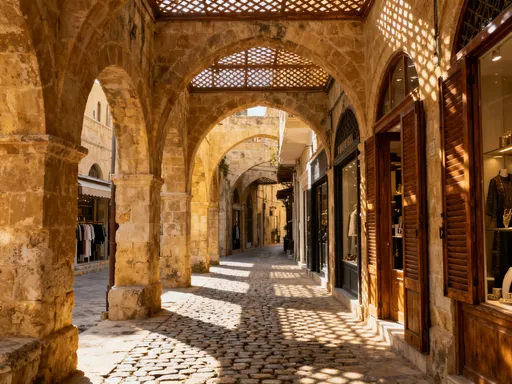
Slow travel invites you to trade itineraries for intuition. Instead of rushing from the Museum of Islamic Art to the Souq Waqif and then to Katara Cultural Village in a single day, you might spend an entire morning in one corner of the city, letting curiosity guide you. This is where Doha reveals itself—not in grand gestures, but in quiet details: the pattern of light filtering through a courtyard lattice, the sound of prayer drifting over the water, the smile of a shopkeeper who remembers your tea order by the third day. These are not moments you can schedule. They happen when you’re present enough to notice them.
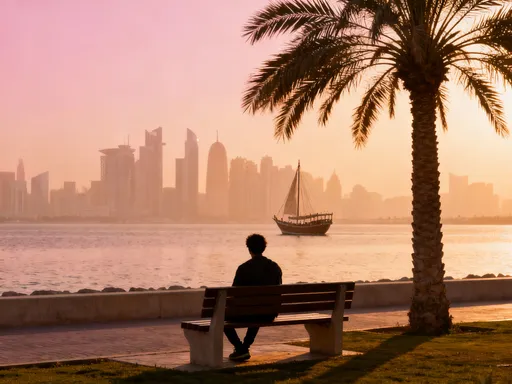
What makes Doha especially suited to this kind of travel is its layered identity. It is both ancient and futuristic, conservative and cosmopolitan, intimate and expansive. The city has grown rapidly, yet it has not erased its roots. Traditional dhows still sail along the corniche, and family gatherings remain central to daily life. When you slow down, you begin to see how modernity and heritage coexist, not in conflict, but in conversation. You realize that Doha does not need to be consumed quickly to be appreciated deeply.
Presence, not productivity, becomes the goal. This is a radical departure from the way many of us travel—checking off attractions, counting steps, chasing the perfect photo. In Doha, the most powerful experiences often come when you’ve stopped trying to capture them. A conversation with a local artist, a spontaneous invitation to a rooftop iftar during Ramadan, or simply sitting on a bench watching the city breathe at dusk—these are the moments that stay with you. They don’t fit neatly into a travel blog post, but they shape your understanding of a place in ways that no guidebook can.
The Heartbeat of the Souq: Sensory Immersion at the Old Doha Market
The Souq Waqif is not just a market; it’s a living archive of Gulf culture. Long before Doha became a global city, this was where traders gathered, where families shopped for spices and fabrics, where stories were exchanged over cups of strong tea. Today, it remains one of the most authentic places in the city—not because it’s frozen in time, but because it continues to evolve while holding onto its soul. To walk through the souq slowly is to step into a sensory world where every corner offers a new layer of discovery.
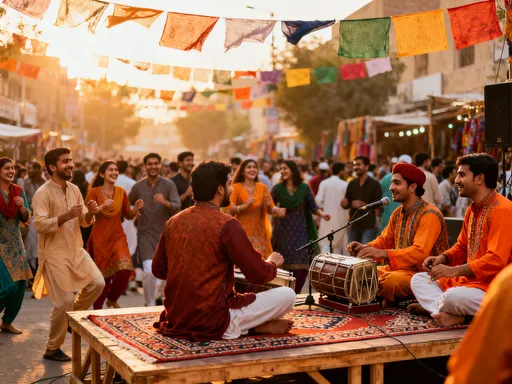
Mornings here begin with the scent of cardamom and grilled lamb drifting from open-air kitchens. The air is warm, carrying the mingled aromas of saffron, dried limes, and rosewater. Vendors call out in Arabic and Urdu, their voices rising and falling like a familiar melody. Stalls overflow with hand-dyed silks, brass lanterns, and baskets of dates arranged like jewels. But the true richness of the souq isn’t in what you can buy—it’s in what you can experience when you take the time to pause.
I remember sitting on a low stool beside a spice merchant who offered me karak tea in a small glass. We didn’t share a language, but we shared a rhythm—pouring, sipping, smiling. He pointed to a dark resin on his counter, crushed a piece between his fingers, and lit it. The smoke curled upward, carrying the scent of frankincense from Oman. He gestured to his father, who sat nearby, and mimed inhaling the smoke. “Family,” he said. That single word, spoken with pride, told a story of tradition, trade, and continuity. It was a moment I hadn’t planned, couldn’t have planned, and would never have had if I’d been rushing to the next stop on my list.
These unplanned conversations are the heartbeat of slow travel. They remind us that people, not places, are the soul of a journey. In the souq, every interaction has the potential to become a highlight—if you’re willing to linger. A falafel seller might invite you to taste his special blend of herbs. A tailor might show you how he measures fabric by hand, just as his father taught him. These are not performances for tourists; they are glimpses into lives lived with care and pride.
To engage respectfully, it’s important to approach with openness, not expectation. Dress modestly, smile often, and don’t treat every interaction as a transaction. Ask permission before taking photos. Spend time in one shop rather than browsing dozens. Buy something small, not because you need it, but because it supports the person in front of you. Slow travel is not about extraction; it’s about exchange. In the souq, that exchange happens naturally, one shared tea, one story, one moment at a time.
A Day Along the Corniche: Where City and Sea Breathe Together
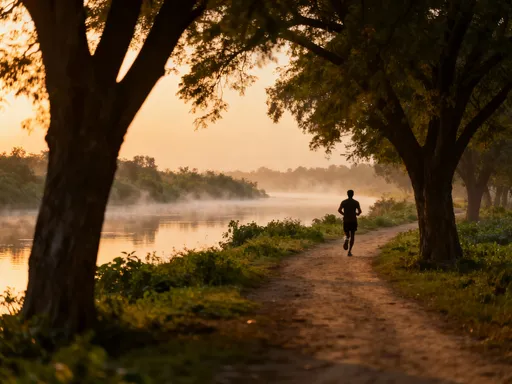
The Doha Corniche stretches for seven kilometers along the Persian Gulf, a ribbon of green and stone where the city meets the sea. At sunrise, it’s nearly empty—just a few joggers, fishermen casting lines from the breakwater, and the occasional family spreading out a blanket for a quiet breakfast. The light is soft, golden, turning the water into liquid amber. This is the best time to walk, when the heat hasn’t yet risen and the city feels hushed, almost reverent. As the sun climbs, so does the energy. By mid-morning, cyclists glide past, children chase kites, and elderly men gather under shaded pavilions to play backgammon, their laughter rising above the lapping waves.
Walking the corniche slowly changes your perception of Doha. From a distance, the skyline looks like a collection of futuristic towers—impressive, but impersonal. Up close, you begin to notice details: the curve of a minaret, the reflection of a mosque dome in a puddle after rain, the way the wind bends the palms just so. You see how the city is designed not just for efficiency, but for life. Benches are placed at intervals, inviting rest. Shaded walkways protect from the sun. Playgrounds and picnic areas are woven into the landscape, making space for families and friends.
What stands out most is how much of Doha’s social life happens in public. Unlike cities where people retreat indoors after work, here the outdoors is where connection happens. Couples stroll hand in hand. Teenagers gather on skateboards. Grandparents push strollers, stopping to chat with neighbors. The corniche is not just a scenic route; it’s a stage for daily life. When you walk it slowly, you become part of that rhythm. You’re not just observing—you’re participating, even in silence.
One evening, I sat on a bench near the Islamic Cultural Center and watched the sunset. A group of women in flowing abayas joined me, unpacking a small meal of dates, fruit, and tea. They smiled and offered me a date, which I accepted with gratitude. We didn’t speak much, but we shared the moment—the sky turning from orange to deep purple, the call to prayer echoing across the water, the gentle hum of the city winding down. It was a simple act of generosity, but it felt profound. In that stillness, I understood that Doha’s warmth isn’t just in its climate; it’s in its people.
Slowing down here allows you to see what speed would obscure. You notice the way a child’s face lights up when he sees a seagull, the way an old man adjusts his ghutra in the breeze, the way the light changes every ten minutes. These are not grand events, but they are the fabric of a place. The corniche teaches you to move with the city’s breath, not against it. It reminds you that travel is not about how far you go, but how deeply you feel.
Cultural Layers at the Museum of Islamic Art Park
The Museum of Islamic Art (MIA) stands on its own island, connected to the mainland by a short causeway. Designed by I.M. Pei, its geometric form rises like a desert fortress, striking in its simplicity. Most visitors come to see the collection—masterpieces of calligraphy, textiles, and metalwork that span over 1,400 years. But for the slow traveler, the true magic lies not just inside the museum, but in the park that surrounds it. MIA Park is a place of contemplation, where art, nature, and architecture come together in quiet harmony.
I returned to the park three days in a row, each time sitting in a different spot. On the first day, I brought a book and read under the shade of a palm. On the second, I sketched the silhouette of a dhow sailing past the museum. On the third, I simply watched the light shift across the water, turning the building from white to rose to gold. Each visit revealed something new—not because the place changed dramatically, but because my attention deepened. When you return to the same place, you begin to notice patterns: the path the fishermen take, the time the joggers appear, the way the breeze carries the scent of jasmine in the evening.
The park is designed to encourage stillness. Wide lawns invite you to sit. Low walls offer perches with panoramic views. The walkways are wide and unhurried, with no rush to get anywhere. Families spread out on blankets, sharing meals. Couples walk hand in hand. Children run freely, chasing bubbles blown by a street performer. The museum’s treasures are impressive, but the park teaches a different kind of appreciation—one that values presence over possession, observation over acquisition.
Sitting there for hours, I realized how rare it is to just be in a city. So much of modern life is about doing, achieving, moving. But in MIA Park, doing nothing feels like a gift. You watch the dhows glide across the bay, their sails catching the wind. You feel the salt in the air, the warmth of the sun on your skin. You listen to the distant hum of the city, softened by the water. In these moments, you’re not a tourist. You’re a witness to beauty, to history, to life as it unfolds.
The value of returning to the same place cannot be overstated. In a single visit, you see what’s obvious. With repeated visits, you begin to see what’s hidden—the gardener who trims the hedges at dawn, the artist who comes every week to paint the skyline, the elderly couple who sit on the same bench every Friday. These are the quiet rhythms of a place, visible only to those who stay long enough to notice. In Doha, where change happens quickly, MIA Park stands as a reminder that some things endure—not because they resist time, but because they embrace it.
Desert Moments: A Calm Escape Just Beyond the City
Just a short drive from Doha’s center, the desert begins. It doesn’t announce itself with drama, but with silence. The skyscrapers fade in the rearview mirror, replaced by endless sand, low shrubs, and the occasional gazelle darting across the road. This is not the desert of dune bashing and adrenaline; it’s a place of stillness, where the horizon stretches in every direction and the sky feels closer than ever. For the slow traveler, it offers a rare gift: emptiness that feels full.
I went with a local guide who didn’t rush. We parked near a low dune and sat on a woven mat, sharing a simple meal of bread, cheese, and tea brewed over a small fire. There was no music, no phone signal, no need to speak. The wind moved the sand in gentle waves. The sun warmed our faces. Above us, the sky deepened from blue to violet. In that silence, I felt more connected—to the earth, to the moment, to myself—than I had in months.
The guide told stories in broken English, pointing to constellations as they appeared. He spoke of his grandfather, who traveled these lands by camel, reading the stars the way we read maps. He showed me tracks in the sand—fox, hare, maybe even a caracal. Each mark was a sign of life in a place that looks barren. I realized that emptiness is not the same as absence. Here, the land speaks in whispers, and if you’re quiet enough, you can hear it.
Responsible visitation is essential. The desert is fragile, and careless tourism can leave lasting damage. Choosing eco-conscious operators—those who minimize waste, avoid sensitive areas, and educate visitors—ensures that this landscape remains pristine. It’s also important to follow local customs: dress modestly, respect private land, and never leave trash behind. Slow travel in the desert isn’t about conquering nature; it’s about coexisting with it.
That night, as we drove back under a sky thick with stars, I felt a deep sense of peace. The city’s lights reappeared on the horizon, but they felt distant, almost unreal. The desert had recalibrated something in me. It reminded me that not every journey needs excitement to be meaningful. Sometimes, the most powerful experiences are the quiet ones—the ones that don’t make it onto social media, but stay in your heart.
Culinary Pauses: Eating Like a Local, One Bite at a Time
Food is one of the most intimate ways to know a place. In Doha, it’s also one of the most revealing. Beyond the polished restaurants of the five-star hotels, there are neighborhood eateries where families gather for breakfast, street carts where workers line up for falafel, and home kitchens where recipes are passed down through generations. To eat like a local is to step into the daily rhythm of life, where meals are not just fuel, but ritual.
One morning, I followed the scent of grilled meat to a small shop in the Fereej Bin Mahmoud area. The room was crowded, steam rising from trays of ful medames and scrambled eggs with tomatoes. A man in a white apron flipped flatbreads on a griddle, calling out orders in Arabic. I pointed to what others were eating, and soon I was handed a plate heaped with food. No menu, no frills, just nourishment served with a smile. As I ate, I watched families share meals at plastic tables, children dipping bread into olive oil, elders sipping tea with deliberate care. This wasn’t dining; it was belonging.
The ritual of karak tea is central to Qatari life. Sweet, milky, spiced with cardamom, it’s served everywhere—homes, shops, offices, even construction sites. It’s more than a drink; it’s an invitation. When someone offers you karak, they’re not just sharing tea—they’re offering time, conversation, connection. I lost count of how many cups I drank, but each one opened a door: a shopkeeper telling me about his son’s graduation, a taxi driver recommending a hidden garden, a woman on a park bench asking about my family. These moments didn’t happen in guidebooks. They happened because I accepted a cup of tea and stayed long enough to talk.
One of the most memorable meals was not in a restaurant at all, but in a home. Through a chance conversation at the souq, I was invited to iftar during Ramadan. The family welcomed me without hesitation, setting a place at the long table. Dates, soup, lamb with rice, sweets soaked in syrup—it was a feast of generosity. But more than the food, it was the warmth of being included, of being seen as a guest, not a stranger. In that moment, I understood that hospitality in Doha is not performative; it’s deeply rooted in culture and faith.
Finding these authentic spots doesn’t require apps or reviews. It requires curiosity, humility, and a willingness to get lost. Walk into a neighborhood you don’t recognize. Follow the crowds at lunchtime. Smile, point, and say “What do you recommend?” The best meals are often the ones you can’t pronounce, served in places with no signage. They’re not trying to impress you. They’re just living, and letting you share it.
Why Slow Travel in Doha Matters: A Personal Shift
When I arrived in Doha, I expected to see a city of glass and gold, impressive but impersonal. What I found was something entirely different—a place that asked me to slow down, to listen, to connect. The transformation wasn’t in the city; it was in me. I stopped seeing myself as an observer and began to feel like a participant. I wasn’t just passing through; I was being welcomed in.
Slow travel reshaped my expectations. I had come looking for sights, but I left with stories. I had planned to cover ground, but I ended up going deep. The quiet confidence I felt navigating the souq, the ease with which I accepted invitations, the comfort I found in stillness—these were not skills I brought with me. They were gifts the city gave me, one moment at a time.
What surprised me most was how little I needed to “do” to feel fulfilled. I didn’t climb towers or book VIP tours. I walked, I sat, I drank tea, I listened. And in those simple acts, I found richness. Doha taught me that connection doesn’t require grand gestures. It grows in small exchanges, in shared silences, in the courage to stay awhile.
For travelers, especially those in the rhythm of busy lives, this is a powerful reminder. You don’t need to chase every attraction. You don’t need to fill every hour. Sometimes, the most meaningful journeys are the ones that ask you to stop. To show up. To be still. To let a place unfold at its own pace. In Doha, that pace is steady, warm, and deeply human. It doesn’t shout. It whispers. And if you’re quiet enough, you’ll hear it.
Doha taught me that depth isn’t found in miles covered, but in moments held. Slow travel here isn’t a method—it’s a mindset. When you stop rushing, the city reveals its rhythm, its warmth, its truth. It’s not about seeing everything. It’s about letting one thing change you. And sometimes, that’s enough.