You Won’t Believe This Secret Cityscape Hiding in Arches National Park
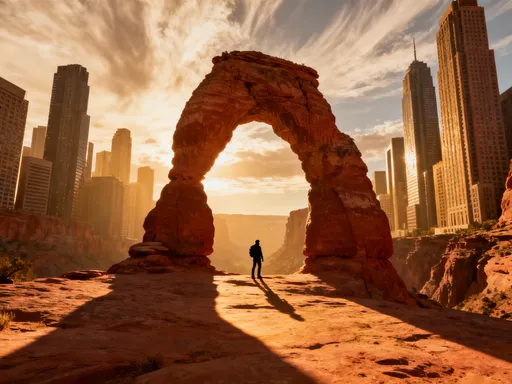
Have you ever imagined finding a cityscape carved by nature in the middle of the desert? I didn’t either—until I stood beneath towering red rock arches that looked like ancient skyscrapers. Arches National Park isn’t just about trails and photo ops; it’s a surreal landscape where stone pillars rise like urban towers under endless skies. This is nature’s architecture at its most dramatic—and surprisingly, it feels like walking through a lost metropolis. The air is still, the light golden, and every turn reveals a new silhouette against the horizon. Here, the earth has built monuments without hands, and silence speaks louder than any city sound. Let me take you through this mind-blowing experience.
The First Glimpse: Entering a Natural Urban Wonderland
As visitors approach Arches National Park from the east along US Highway 191, the landscape appears deceptively flat—a sea of sagebrush and sandstone stretching beneath an immense sky. But just beyond the park entrance, the earth begins to rise in dramatic fashion. The transition is subtle at first: a distant red fin cutting the horizon, then another, then clusters of sandstone spires emerging like the first towers of a hidden city. By the time travelers reach the Windows Section, the illusion becomes undeniable. Massive formations such as North Window, South Window, and Turret Arch stand in near-perfect alignment, their smooth curves and vertical lines evoking the symmetry of urban design. The rock itself—Entrada sandstone, sculpted over millions of years—glows in warm hues of rust, amber, and deep maroon, especially at sunrise and sunset.
What makes this natural cityscape so convincing is not just the scale of the formations but the way light and shadow play across them. In the early morning, long shadows stretch between the fins and arches like alleys in a forgotten district. Sunlight pours into narrow canyons, illuminating walls that rise hundreds of feet, smooth and striated like the façades of ancient palaces. Balanced Rock, a 136-foot-tall tower with a 3,600-ton boulder perched atop a slender pedestal, stands as a kind of gateway sentinel—its improbable balance defying gravity and logic, much like a monument placed with intention. The absence of vegetation in many areas adds to the urban feel, stripping the scene down to pure form and structure.
Visitors often describe a sense of awe that goes beyond typical scenic beauty—it’s more akin to walking into a ceremonial center built by a long-vanished civilization. Yet no human hands shaped these forms. Instead, wind, water, and time have been the architects. The park contains over 2,000 documented natural stone arches, more than any other place on Earth, and each one contributes to the feeling of an organic metropolis. Rangers often remind guests that what appears to be a planned arrangement is the result of erosion patterns dictated by rock layers and underground salt movement. Still, the human mind, trained to recognize order, cannot help but see streets, plazas, and towers where none were intended.
Delicate Arch: The Crown Jewel with a Skyline View
No single formation in Arches National Park captures the spirit of this natural cityscape more completely than Delicate Arch. Standing alone on a sweeping sandstone fin, this 65-foot-tall freestanding arch has become the symbol of Utah and one of the most photographed landmarks in the American Southwest. But seeing it in person is a profoundly different experience from viewing any image. The hike to Delicate Arch—3 miles round-trip with moderate elevation gain—takes visitors across exposed rock slabs, around sharp bends, and finally up a sloping ramp to a natural amphitheater where the arch rises like a monument in the center of a vast plaza. From this vantage point, the La Sal Mountains appear framed perfectly in the arch’s curve, their snow-capped peaks glowing in the distance like a skyline glimpsed through a cathedral window.
The trail itself enhances the sense of approaching something sacred. Unlike many other arches visible from roadside pull-offs, Delicate Arch demands effort and presence. There are no guardrails at the final viewpoint, only open rock and space. This lack of barriers allows for unobstructed views and a deep sense of immersion. At sunrise, the arch glows from within as the first light strikes its curved surface. At sunset, it becomes a silhouette against a blazing sky, drawing crowds who sit in quiet reverence as the colors shift. Photographers, families, and solo travelers alike gather here, not just for the picture, but for the moment—a pause in time beneath a natural monument that feels both eternal and fleeting.
What makes Delicate Arch feel like the heart of this stone city is its isolation and prominence. It does not blend into the landscape; it commands it. The surrounding terrain slopes away, emphasizing its stature, much like a central tower in an ancient capital. Archaeological evidence suggests that Native American communities, including the ancestors of the Pueblo people, once gathered in this area, possibly for ceremonial purposes. While no definitive structures remain, the alignment of the arch with celestial events and the acoustics of the bowl-like space below hint at a deeper significance. Today, rangers occasionally lead interpretive talks at dawn, explaining both the geological history and the cultural reverence surrounding the site.
Devils Garden: A Maze of Stone Towers and Hidden Pathways
If Delicate Arch represents the ceremonial center of this natural city, then Devils Garden is its labyrinthine old quarter—a district of narrow alleys, hidden courtyards, and towering stone sentinels. Located at the end of the main park road, this otherworldly area is home to some of the most concentrated and diverse arch formations in the park. The landscape here is shaped by a network of narrow sandstone fins—walls of rock that rise vertically from the desert floor—separated by deep, winding canyons. Over time, erosion has carved windows through these fins, creating arches such as Landscape Arch, the longest in the park at 290 feet, as well as Double O Arch, Partition Arch, and Navajo Arch.
Visitors can explore Devils Garden via a series of interconnected trails ranging from easy walks to challenging backcountry routes. The shortest loop, about 1.5 miles, leads to Landscape Arch and offers close-up views of its impossibly thin span, which appears ready to collapse at any moment—though geologists estimate it could remain standing for centuries. For more adventurous hikers, the Primitive Loop trail—a 7.2-mile circuit—winds through narrow ledges, requires scrambling over rocks, and passes through several arches, each revealing a new perspective on the garden’s complexity. This trail is not maintained in the traditional sense; hikers follow cairns and instinct, adding to the sense of discovery.
What sets Devils Garden apart is the feeling of solitude and immersion. Even on busy days, the layout of the terrain ensures that visitors quickly disappear from view, swallowed by the maze of rock. The silence is profound, broken only by the wind whistling through arches or the distant call of a raven. As sunlight moves across the fins, colors shift from deep red to soft pink, and shadows create the illusion of moving walls. Many describe the experience as walking through the ruins of an ancient city reclaimed by nature, where stairways lead nowhere and doorways open into thin air. The name “Devils Garden” was given by early cowboys who found the terrain too treacherous to navigate, but today it evokes a place of mystery and quiet wonder rather than danger.
Nightfall in the Rock Metropolis: Stargazing Above the Stone Canyons
As daylight fades, Arches National Park undergoes a transformation that deepens its cityscape illusion. With no streetlights, buildings, or ambient glow from nearby towns, the park becomes one of the darkest places in the United States—designated as a Gold Tier Dark Sky Park by the International Dark-Sky Association. Once the sun sets, the sky erupts in stars. The Milky Way arcs overhead in brilliant clarity, its dense band of light reflecting faintly off the red rock walls below. From certain vantage points, like the overlook near Balanced Rock or the open fields near the Devils Garden campground, the effect is surreal: it’s as if the stone towers are lit not by electricity, but by starlight, their silhouettes standing like monuments beneath a celestial dome.
Stargazing in Arches is more than a visual experience—it’s a sensory and emotional one. The vastness of the sky, unobstructed by light pollution, evokes a deep sense of perspective. Visitors often report feeling both small and connected, as if witnessing something ancient and universal. Park rangers host regular night sky programs during the spring and summer months, using laser pointers to trace constellations, explain planetary movements, and share stories from Native American and early settler traditions. These programs are held at the Island in the Sky district or the Devils Garden amphitheater, where folding chairs are set up and telescopes allow for close views of Jupiter’s moons or Saturn’s rings.
The combination of geological and astronomical wonder makes nighttime in Arches uniquely powerful. Photographers use long exposures to capture star trails spiraling around the North Star, with arches like North Window or Turret Arch anchoring the composition. The contrast between the ancient rock—formed over 150 million years ago—and the light from stars thousands of light-years away creates a profound sense of timelessness. For families, couples, and solo travelers alike, sitting under the stars in this stone city offers a rare moment of stillness and reflection. It’s a reminder that the Earth’s artistry extends far beyond the surface—that the sky, too, is part of the landscape.
How to Experience the Cityscape Vibe Like a Pro
To truly appreciate the urban-like quality of Arches National Park, visitors should approach it not as a checklist of photo stops, but as an immersive sensory experience. Timing is essential. The best light for capturing the cityscape illusion occurs during the golden hour—shortly after sunrise and before sunset—when the low-angle sun casts long shadows and enhances the three-dimensionality of the rock formations. The blue hour, just before dawn and after dusk, offers a softer, cooler light that can make the arches appear ethereal, almost floating above the desert floor. These times are also when the park is least crowded, allowing for quiet contemplation.
Photographers should bring a tripod and a wide-angle lens to capture both the scale of the arches and their relationship to the surrounding landscape. A polarizing filter can help reduce glare and deepen the colors of the sandstone. But even without a camera, simply sitting and observing can reveal hidden patterns. Look closely at the rock walls: notice how cracks align like streets, how alcoves resemble windows, and how spires stand like columns. The human brain is wired to find meaning in patterns, and in Arches, that tendency leads to delightful discoveries. Children often see castles and doorways first; adults may need a moment to reawaken that sense of imaginative seeing.
To avoid crowds, especially at Delicate Arch and the Windows Section, arrive early in the morning or stay late into the evening. The park implemented a timed entry reservation system during peak season (spring and fall) to manage congestion, so planning ahead is crucial. Consider visiting in late fall or winter, when temperatures are milder and visitor numbers drop significantly. Staying at nearby Moab allows for flexibility, but camping inside the park—especially at Devils Garden—offers the rare chance to fall asleep and wake up surrounded by stone towers. Bring plenty of water, wear sturdy shoes, and stay on designated trails to protect the fragile desert crust, which can take decades to recover from a single footprint.
Why This Natural Cityscape Matters: Geology Meets Wonder
The reason Arches National Park looks like a city sculpted by nature lies deep beneath the surface—literally. The story begins over 300 million years ago, when a vast inland sea covered the region. As the water evaporated, it left behind a thick layer of salt up to 5,000 feet deep. Over millions of years, sediments—sand, silt, and clay—accumulated on top, burying the salt. When the weight of these layers became too great, the salt began to flow, creating domes and ridges that bent the overlying rock. As the land rose and eroded, water seeped into cracks, dissolving the salt and weakening the rock from below. This process, called salt tectonics, set the stage for the dramatic formations seen today.
Once the surface rock was exposed, wind and water took over. Rainwater, slightly acidic from absorbing carbon dioxide, slowly dissolved the sandstone along vertical cracks, widening them into fins. Over time, these fins developed holes—first as alcoves, then as arches. Frost wedging, where water freezes in cracks and expands, played a key role in breaking apart the rock. Each arch is temporary; some, like Wall Arch, have collapsed in recent decades. Landscape Arch, though still standing, shows large fractures and may fall within the next century. The park loses an arch on average every few years, a reminder of nature’s constant change.
Despite their impermanence, these formations inspire a sense of permanence and grandeur. Their architectural appearance is not accidental—symmetry, proportion, and repetition are all products of natural forces acting uniformly over time. The park’s protection since 1929, first as a national monument and then as a national park, ensures that this geological wonder remains intact for future generations. Conservation efforts focus on minimizing human impact: staying on trails, not touching the rock (which accelerates erosion), and respecting wildlife. By preserving Arches, we also preserve a place where imagination can roam freely, where the boundary between nature and art dissolves.
Final Thoughts: Reimagining Nature as Architecture
Arches National Park challenges the way we see the natural world. It reminds us that wilderness is not always chaotic or untamed—sometimes, it mimics order, design, and intention. Walking among the red rock towers and arches, one cannot help but feel a deep connection to the Earth’s creative power. This is not a city built by hands, but one shaped by time, pressure, and patience. The silence between the formations speaks of resilience, of beauty forged slowly and without haste.
For travelers, especially those seeking meaning beyond the surface, Arches offers a rare gift: the chance to witness nature as both artist and architect. It invites us to slow down, to look closely, and to let our minds wander. In a world filled with noise and speed, this stone metropolis stands as a monument to stillness and scale. It does not demand attention—it earns it. And for those willing to listen, it offers a quiet revelation: that the most enduring structures are not made of steel or glass, but of sand, salt, and time. So the next time you plan a journey, consider stepping off the beaten path, not just geographically, but perceptually. Look beyond the obvious landmarks. Seek the hidden cityscapes. You might just find one waiting in the desert, built by no one, belonging to everyone.